
INSIGHTS
Ideas worth thinking about
ECONOMICS OF EVERYDAY LIFE
What economics can teach us about the choices we make, the value we assign, and the lives we build.
Equilibrium & Trade-Offs: You Can't Maximise Everything
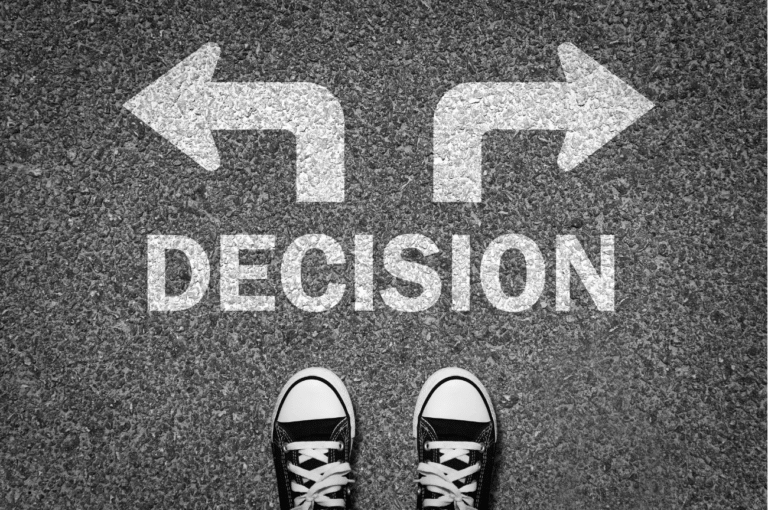
There is a question we ask far more often than we realise:
“How can I have both?”
More income and more free time.
More growth and less risk.
More quality and lower cost.
More flexibility and more control.
More ambition and more rest.
More opportunity and less uncertainty.
Sometimes, we can.
Often, we can’t.
And Economics has a rather unsentimental way of explaining why.
Trade-offs.
Something has to give
A trade-off exists when getting more of one thing means having less of something else.
It is not necessarily a sign that we have made a bad choice.
It is a consequence of scarcity.
Our resources are limited.
Our time is limited.
Our money is limited.
Our attention is limited.
So when we allocate more of something to one priority, there is usually less available for another.
That doesn’t mean we have to choose between two terrible options.
It means that choices have consequences beyond the choice itself.
And sometimes those consequences are exactly what make the decision difficult.
Then comes equilibrium
In economics, equilibrium broadly describes a point where opposing forces are balanced enough that there is no immediate pressure for the situation to change.
In a market, for example, equilibrium can occur where the quantity people want to buy corresponds with the quantity producers are willing to sell.
It isn’t necessarily perfect.
It isn’t necessarily permanent.
And it certainly doesn’t mean everyone is delighted.
It simply means the forces currently acting on the system are sufficiently balanced.
That distinction matters.
Because we often treat equilibrium as though it means:
“Everything is good now.”
It doesn’t.
Sometimes equilibrium simply means:
“This is where things currently settle.”
And that can change.
Life rarely gives us a clean answer
Consider work.
You want to advance your career.
You also want time with your family.
You want to earn more.
You also want less stress.
You want meaningful work.
You also need financial security.
None of those desires are unreasonable.
The problem is that they compete for scarce resources.
More hours at work may create more income but reduce time elsewhere.
Reducing your hours may give you more personal time but affect income or advancement.
Taking a risk may create greater opportunity but increase uncertainty.
Choosing stability may reduce risk but also limit potential upside.
There is no magic formula that makes the competing forces disappear.
There is a decision to make.
The fantasy of “having it all”
Perhaps this is why the phrase “You can have it all” has always bothered me a little.
Maybe you can.
But probably not all at the same time, at maximum levels, without paying a price somewhere.
And that is a very different proposition.
We don’t have to reject ambition.
We don’t have to romanticise sacrifice.
We don’t have to accept that life must be miserable in order to be meaningful.
But we do need to acknowledge trade-offs.
Because pretending they don’t exist doesn’t eliminate the cost.
It simply means we discover the cost later.
Usually when someone else — or some other part of our life — sends the invoice.
Businesses face the same problem
A business might want to be:
- the cheapest option;
- the highest quality;
- the fastest;
- the most personalised;
- the most innovative;
- and the most profitable.
Perhaps it can achieve several of these.
But maximising all of them simultaneously is unlikely.
Lower prices can put pressure on margins.
More personalisation can increase costs.
Greater quality may require more time or resources.
Faster delivery may require additional capacity.
More innovation often involves more uncertainty.
The business isn’t necessarily failing because it cannot maximise everything.
It is making choices about which dimensions matter most.
That is strategy.
The trade-offs are part of the strategy, whether we acknowledge them or not.
Leadership is full of competing goods
This becomes particularly interesting in leadership.
A manager wants to give people autonomy.
But also wants accountability.
They want to move quickly.
But also want people to consult appropriately.
They want high standards.
But also want psychological safety.
They want innovation.
But also want consistency.
They want a collaborative team.
But also need individual accountability.
The temptation is to look for a leadership philosophy that resolves all these tensions permanently.
It doesn’t exist.
Because leadership is often less about eliminating competing demands and more about managing the tension between them deliberately.
And this is where equilibrium becomes useful.
The balance doesn’t have to be fifty-fifty.
In fact, it rarely should be.
Different situations require different allocations.
During a crisis, speed may matter more.
During a strategic planning period, deliberation may matter more.
With an experienced employee, autonomy may be appropriate.
With someone learning a new role, more guidance may be necessary.
Equilibrium is not equal distribution.
Balance does not always mean equal.
Sometimes it means appropriate.

And then the balance moves
Here’s the part I find particularly interesting.
Equilibrium isn’t necessarily where we arrive and stay.
Circumstances change.
A new competitor enters the market.
A customer changes expectations.
A team member leaves.
A child grows older.
A business enters a new stage.
Your priorities change.
Your resources change.
New information appears.
The forces change.
So the balance changes.
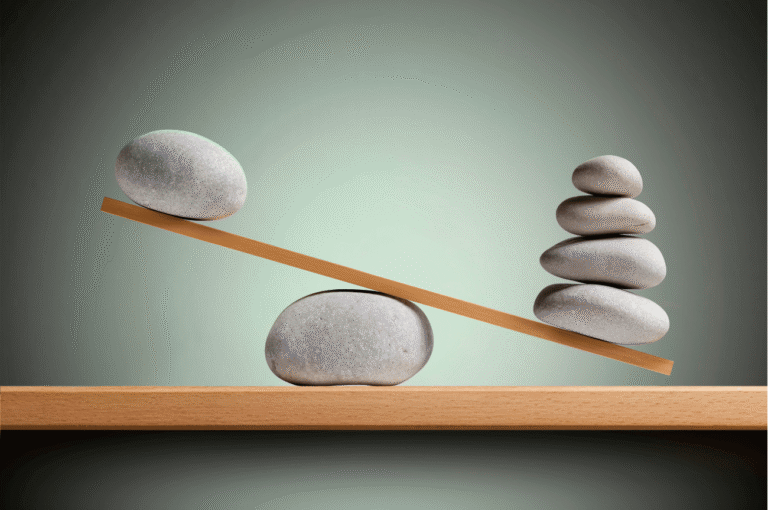
What was sensible five years ago may no longer be sensible today.
And that doesn’t automatically mean your earlier decision was wrong.
It may simply mean the conditions are different.
This is something we sometimes forget when judging our own past decisions.
We look backwards with information we didn’t have at the time and wonder why we didn’t choose differently.
But decisions are made within circumstances.
Change the circumstances, and the equilibrium can move.
The danger of optimising one thing
There is another lesson here.
When we become obsessed with maximising one outcome, we can accidentally damage the system supporting it.
Maximise revenue at any cost, and you may damage trust.
Maximise productivity, and you may exhaust people.
Maximise convenience, and you may sacrifice quality.
Maximise growth, and you may outgrow your systems.
Maximise personal freedom, and you may avoid the commitments that create meaningful relationships.
Maximise security, and you may never take the risks necessary to grow.
The thing we optimise isn’t always the thing we ultimately value most.
A number can improve while a life gets worse.
That is worth remembering.
So what are you actually optimising?
That’s the question. Not:
“How do I get everything I want?”
But:
“What am I willing to trade for what matters most?”
And even more importantly:
“What am I currently sacrificing without realising that I am?”
Because every allocation creates a trade-off.
Every yes uses resources.
Every priority pushes something else further down the list.
Every decision creates a new balance.
The goal isn’t to eliminate trade-offs.
We can’t.
The goal is to make them consciously.
To know what we’re gaining.
To know what we’re giving up.
To recognise when the balance has shifted.
And to have the courage to rebalance when it no longer serves us.
Because equilibrium is not a destination where life finally becomes perfect.
It is a moving point of balance between competing forces.
And sometimes, the most intentional decision we can make is not to ask:
“How can I have everything?”
but:
“What matters enough that I am willing to give something else up?”
Because you can’t maximise everything.
But you can decide what is worth maximising.
– Insights by Norra Ismail
Looking for a Speaker?
A good talk should give people something to think about – and, ideally, something worth taking with them afterwards.

Think clearly.
Live meaningfully.
Grow with purpose.
Was this post helpful?
If you found this post helpful and you think it can help someone else, please share it.
It takes time to come up with meaningful content. If you appreciate the content and would like to help me rebuild my life after a profound loss, please consider making a contribution.

Leave a comment