What economics can teach us about the choices we make, the value we assign, and the lives we build.
Diminishing Marginal Utility:
When More Stops Feeling Like More
5 mins read
There is a peculiar thing about getting what we want.
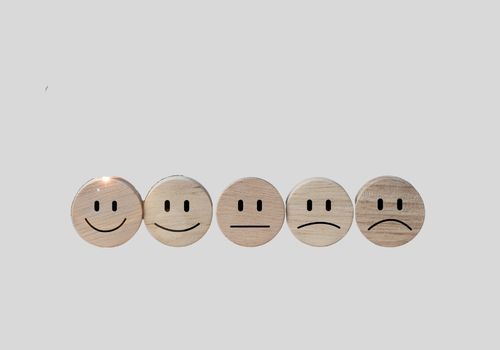
The first one can feel wonderful.
The second is nice.
The third?
Well…
How many do we actually need?
Economics has a concept for this: the Law of Diminishing Marginal Utility.
It describes the tendency for the additional satisfaction we get from consuming one more unit of something to decrease as we consume more of it.
In simpler terms:
The first one gives us more satisfaction than the second. The second gives us more than the third. And eventually, another one may barely matter at all.
Think about being hungry.
The first few bites of a meal can be incredibly satisfying.
Keep eating, and each additional bite generally adds less satisfaction.
Eventually, you are full.
That extra bite isn’t necessarily worth much to you anymore.
The food hasn’t changed.
Your experience of it has.
And that distinction is where things get interesting.
Because humans are remarkably good at getting used to things.
The new phone.
The new handbag.
The bigger house.
The promotion.
The nicer car.
The holiday.
The salary increase.
At first, they can feel significant.
We notice them.
We appreciate them.
We tell people about them.
And then, after a while, they become normal.
The thing that once felt like an upgrade becomes the baseline from which we evaluate what comes next.
And suddenly, the satisfaction we thought would last has faded.
So we want the next thing.
This is where “more” becomes a dangerous word.
More money.
More recognition.
More followers.
More possessions.
More success.
More experiences.
More achievement.
There is nothing inherently wrong with wanting more.
The problem begins when we assume that more will automatically produce more satisfaction.
Sometimes it does.
But sometimes we are simply moving the finish line.
We achieve something, enjoy it briefly, adapt to it, and then start wanting the next thing.
The goal isn’t necessarily the problem.
The assumption that the next goal will finally make us feel enough may be.
But… this isn’t an argument against ambition.
I want to be careful here.
Diminishing marginal utility does not mean:
Stop wanting things.
Stop improving.
Be grateful and settle.
Ambition is bad.
That would be a rather convenient –and rather simplistic– conclusion.
Progress matters.
Better circumstances matter.
More financial security matters.
Greater freedom matters.
Achievement can be deeply satisfying.
The point is not that more is worthless.
The point is that the additional value we receive from more may not remain constant.
And knowing that can change how we pursue it.
The more interesting question is: “More of what?”
Because not everything we accumulate behaves in quite the same way.
The tenth luxury handbag may not bring the same satisfaction as the first.
But the tenth meaningful conversation with someone you love may not feel like “just another conversation.”
The value of learning can continue to grow as knowledge connects with knowledge.
A skill can become more valuable as competence deepens.
A relationship can become richer through shared history.
And sometimes, having more of something can actually increase its value rather than reduce it.
So this isn’t simply about consuming less.
It is about becoming more conscious of what kind of value we are pursuing.
There is another uncomfortable part.
Sometimes we don’t actually want the thing.
We want what we think the thing will make us feel.
Successful.
Secure.
Important.
Admired.
Free.
Enough.
And once we get it, we discover that the feeling doesn’t stay.
So we go looking for another thing to produce it.
That can become an exhausting cycle.
Want → acquire → adapt → want again.
Economics can explain part of that cycle.
Psychology explains more of it.
But perhaps life asks the harder question:
What are we trying to satisfy?
Because if we don’t know that, we can spend years accumulating things that were never capable of satisfying the need underneath them.
Which brings us back to “enough.”
Enough is a strange concept.
It isn’t necessarily a number.
It isn’t the absence of ambition.
And it certainly isn’t the same for everyone.
Enough can mean having what you need to live well.
Enough can mean reaching a financial threshold that gives you freedom.
Enough can mean knowing when another promotion isn’t worth the additional cost.
Enough can mean buying the thing because you genuinely value it—not because you need another hit of novelty.
And sometimes, enough simply means:
I don’t need another thing to prove that I am doing well.
That may be one of the most difficult lessons in a culture that is exceptionally good at convincing us that we are always one purchase, one achievement or one upgrade away from something better.
Maybe the goal isn’t to want less.
Maybe it’s to understand what happens when we get more.
Because the first one might genuinely make you happy.
The second might still be wonderful.
The third might be nice.
And the fourth?
You might barely notice it.
The question isn’t whether you should want more.
It is whether more is actually giving you more.
Because sometimes what we are chasing isn’t greater satisfaction.
It is simply the memory of the satisfaction we felt the first time.
It takes time to come up with meaningful content. If you appreciate the content and would like to help me rebuild my life after a profound loss, please consider making a contribution.











Leave a comment