
INSIGHTS
Ideas worth thinking about
ECONOMICS OF EVERYDAY LIFE
What economics can teach us about the choices we make, the value we assign, and the lives we build.
Information Asymmetry: You Don't Know What You Don't Know
There is a sentence I’ve used for years:
“You don’t know what you don’t know.”
I’ve always believed it was one of the most important reasons to keep learning.
Not because we need to know everything.
We never will.
But because we cannot make good decisions about something we don’t even realise we don’t understand.
And then I discovered that Economics had a rather sophisticated way of describing part of this problem:
Information asymmetry.
It sounds technical.
It is actually everywhere.
When one person knows more than the other
Information asymmetry occurs when the parties involved in a transaction or decision have different levels of relevant information.
One person knows something the other doesn’t.
A seller knows more about a product than a buyer.
An employee knows more about what actually happens in their daily work than a senior executive might.
A professional knows more about their area of expertise than the client hiring them.
A person negotiating a deal may know something the other party doesn’t.
The imbalance itself isn’t necessarily dishonest.
Sometimes it simply exists because different people have different experiences, roles and access to information.
The interesting question is:
What happens when decisions are made based on incomplete or uneven information?
The used-car problem
One of the classic examples in economics is the market for used cars.
Imagine you are buying a second-hand car.
The seller knows the car’s history.
They know whether it has been maintained properly.
They may know about problems that haven’t yet become obvious.
You, the buyer, don’t.
You can inspect the car.
You can ask questions.
You can check the records.
But there may still be things you don’t know.
The seller has information you don’t have.
That difference can affect the price you are willing to pay.
And that is where information becomes more than knowledge.
Information changes decisions.
That is the part I find fascinating.
We make decisions with incomplete information all the time
Think about buying a house.
Choosing a job.
Hiring someone.
Choosing a business partner.
Selecting a training provider.
Signing a contract.
Investing money.
Entering a relationship.
Even deciding whether a restaurant is worth trying.
We rarely have complete information.
Instead, we make decisions using what we know, what we believe, what we are told and what we can reasonably verify.
And sometimes we make assumptions to fill the gaps.
That is where things get interesting.
Because an information gap doesn’t stay empty for very long.
Our brains tend to fill it.
And what fills the gap may be evidence.
Or experience.
Or intuition.
Or assumption.
Or marketing.
Those are not the same thing.
What we don’t know can be expensive
Imagine you’re hiring someone because they look impressive on paper.
Good qualifications.
Excellent presentation.
Confident interview.
Strong references.
You make the decision.
Months later, you discover something important that wasn’t visible during the hiring process.
The person isn’t necessarily dishonest.
You simply didn’t have all the information you needed to evaluate the decision accurately.
Now consider the opposite.
Perhaps the person has excellent capability but isn’t particularly good at selling themselves.
Another candidate interviews brilliantly.
The second person gets the job.
Again, information matters.
The decision-maker isn’t necessarily choosing the better candidate.
They are choosing based on the information available to them.
That distinction matters enormously.
An informed decision is not necessarily a correct decision.
It is a decision made with the information available.
And sometimes the information available is incomplete.
Information creates power
This is where Information Asymmetry becomes more interesting — and more uncomfortable.
If one party knows considerably more than another, the party with more information may have an advantage.
That advantage can be used responsibly.
Or exploited.
Think about a professional dealing with a client who doesn’t understand the technical details of the service being purchased.
The client has to trust the professional.
That trust can be honoured.
Or manipulated.
The same applies to financial products, contracts, medical decisions, technology, property transactions and countless other situations.
The person who knows more often has greater influence over the decision.
Which means knowledge isn’t just information. It can be power.
And with power comes responsibility.
This is where trust enters
When we cannot know everything ourselves, we rely on other people.
We rely on experts.
We rely on institutions.
We rely on reviews.
We rely on recommendations.
We rely on people who have done something before us.
We cannot personally verify every claim made to us.
That would be impossible.
So life requires a certain amount of trust.
But trust doesn’t mean switching off our judgement.
There is a difference between:
“I don’t know this, so I will trust someone who does.”
and
“I don’t know this, so I don’t need to understand it.”
The first is sensible delegation.
The second can become dangerous.
The responsibility of the knowledgeable
This is particularly relevant to leadership.
A leader may know more about the organisation’s strategy than the team.
A manager may know more about why a decision was made.
A senior professional may understand risks that a junior employee cannot yet see.
That information difference is natural.
But how the knowledgeable person uses that advantage matters.
Do they explain?
Do they educate?
Do they create access to information?
Do they deliberately keep people uninformed because it makes them easier to control?
The difference between those approaches is enormous.
Good leadership doesn’t require everyone to know everything. It requires people to have enough information to make responsible decisions.
And then there is the information we don’t know we need
This, for me, is the most fascinating part.
Sometimes we know we don’t know something.
So we ask.
But what about the things we don’t realise are relevant?
You can ask a question only when you know enough to think of the question.
You cannot easily investigate a risk you don’t know exists.
You cannot challenge an assumption you don’t realise you’re making.
You cannot search for information you don’t know you need.
This is where learning becomes so important.
Not because learning gives us all the answers.
It gives us better questions.
The more we learn, the more we begin to see the edges of what we don’t know.
And that can be humbling.
But it can also be liberating.
Expertise should create better questions
This is one reason I have never believed that expertise means having all the answers.
Sometimes expertise is knowing:
What should I be looking at?
What could I be missing?
What question hasn’t been asked?
What assumption are we making?
Who knows something we don’t?
What information would change this decision?
That’s a much more useful form of knowledge.
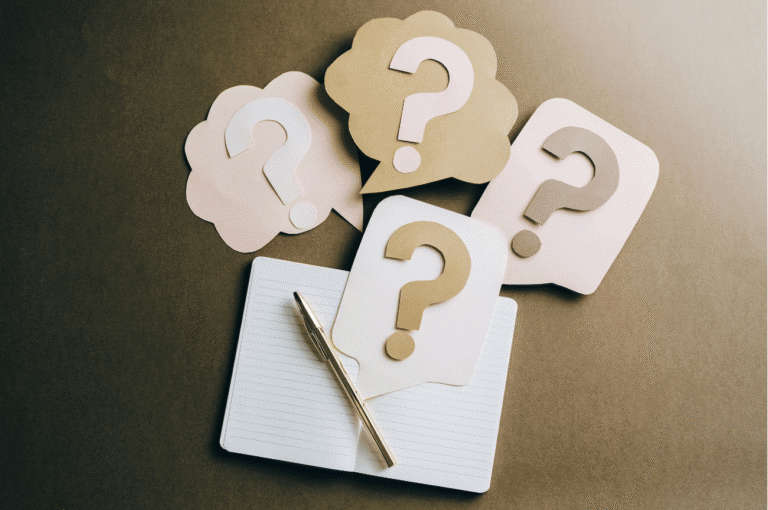
And perhaps this is why the smartest people I’ve encountered aren’t necessarily the ones who speak with the most certainty.
They know enough to recognise uncertainty.
They know where their knowledge ends.
And they know when they need to learn, investigate or ask someone else.
Information asymmetry in everyday life
The lesson isn’t that we should become suspicious of everyone.
Nor is it that we should refuse to make decisions until we have perfect information.
We never will.
The lesson is to become more conscious of the information behind our decisions.
Before you buy:
What do I know? What don’t I know?
Before you agree:
What information does the other person have that I don’t?
Before you advise:
What might I be assuming?
Before you lead:
What do I know that my team doesn’t?
Before you learn:
What don’t I even know to ask about yet?
These questions don’t guarantee perfect decisions.
They make better decisions more possible.
And that is the real point
After all these economic principles, I keep coming back to the same thing.
Scarcity taught us that we cannot have everything.
Opportunity Cost taught us that every choice gives something else up.
Sunk Cost taught us not to let what we’ve already invested dictate what we do next.
Comparative Advantage taught us to understand where we create value.
Specialisation taught us that focus can make that value stronger.
Elasticity taught us that not everything responds to change in the same way.
Equilibrium and Trade-Offs taught us that competing forces cannot always be eliminated.
And now Information Asymmetry reminds us of something more fundamental:
We make choices from within the limits of what we know.
Sometimes we make a poor decision because we ignored information.
Sometimes because we were given bad information.
Sometimes because we didn’t ask.
And sometimes because we simply didn’t know there was something we needed to know.
That last one deserves humility.
Not shame.
Humility.
Because none of us knows everything.
And perhaps the goal isn’t to eliminate what we don’t know.
Perhaps it is to become curious enough to keep discovering it.
You don’t know what you don’t know
So here we are.
Back at the sentence I’ve carried for years:
You don’t know what you don’t know.
Economics gave me a new way of looking at it.
It isn’t simply a reminder to keep learning.
It is a reminder that information shapes choices.
And when information is incomplete, uneven or misunderstood, our decisions can change with it.
Which means that perhaps one of the most valuable questions we can ask — in business, in leadership, in relationships and in life — is not:
“What do I know?”
but:
“What might I be missing?”
Because the moment you realise there is something you don’t know, you have something you can learn.
But if you don’t even realise it’s there?
You may never look for it.
And that may be the most important thing you didn’t know you didn’t know.
– Insights by Norra Ismail
Looking for a Speaker?
A good talk should give people something to think about – and, ideally, something worth taking with them afterwards.

Think clearly.
Live meaningfully.
Grow with purpose.
Was this post helpful?
If you found this post helpful and you think it can help someone else, please share it.
It takes time to come up with meaningful content. If you appreciate the content and would like to help me rebuild my life after a profound loss, please consider making a contribution.
Leave a comment