
NORRATOR – NORRA + narrator
Stories shaped by experience
The C Word
17 mins read
You have likely heard the phrase countless times: “You have to take care of yourself before you can take care of others.”
But is it actually true? Or is it just a convenient excuse to be entirely self-centered?
If you are single and have no one under your care, anything you do for yourself is rightfully deserved. You work hard, you secure your basic needs, and you treat yourself to life’s extras. There is immense joy in giving, but you can only give to others if your own well is full.
However, for those who carry the weight of others under their care, the calculation changes. We routinely put everyone else first. In the long run, that constant self-neglect results in a profound physical, mental, and emotional imbalance.
Sometimes, that imbalance becomes the exact line between life and death.
In my early years as a single parent, my definition of success was straightforward: work hard, earn an abundant living, and provide a comfortable, high-end life for my children. By that metric, I was incredibly successful.
Back in the early 2000s, I was only in my late twenties and already commanding a thriving five-figure monthly salary. By my early thirties, I purchased my own property in a central urban area, filling it with modern furniture and fixtures. I handed my children allowances that far exceeded what an average teen or tween needed, and disposable income was never in short supply. My absolute biggest daily hurdle was simply managing inefficient domestic maids.
Life coasted on this high-octane track for several years. I willingly traded longer hours for larger paychecks; trading time for money made perfect mathematical sense to me back then.
What I inadvertently neglected, however, was my health and my connection to my children.
My life was a modern version of the show Mad Men. We lived by the classic urban mantra: work hard, play hard. Nice house, flashy cars, lively weekend parties. It is the hollow creed of the successful urbanite who believes they are living life to the fullest simply because they labor the hardest.
In reality, that mantra is the absolute antithesis of self-care. It completely blinds you from looking at what truly matters.
When you live life in the fast lane, the scenery moves so quickly that everything becomes a blur. Looking back, that era was the fuzziest part of my life. I can barely recall the details. Everything had to be executed at maximum speed. If something broke at home, I didn’t waste time scheduling repairs or comparing prices; I simply bought a brand-new replacement. Money was no object.

The same frantic pacing governed my corporate life. Drive to appointments, extract client briefs instantly, schedule rapid brainstorming sessions, present fast, and lock down the contract immediately. I worked predominantly with media owners, and unsold advertising inventory was exactly like empty seats on a departing plane – if the trip happens and the seats are vacant, the revenue is lost forever. I was constantly racing against the clock.
While busy living this fast-paced life “to the fullest,” I noticed I was experiencing irregular physical bleeding. My cycle had been irregular since my teenage years, and I had relied on birth control pills for years to regulate it. But this time, an internal instinct whispered that something was fundamentally wrong.
I begrudgingly scheduled an appointment with my gynecologist. I felt annoyed by the interruption; I was genuinely enjoying my work and making excellent money. After a physical check, she couldn’t be certain of the cause and informed me that I needed minor surgery to extract tissue samples for a biopsy.
“Urgh, that is going to take up so much time,” I thought.
I immediately asked her exactly how many hours this ordeal would consume because my corporate dashboard was overflowing. I wasn’t worried about the cost – my company provided stellar medical benefits, and my personal insurance was robust.
I was admitted to the hospital a day before the procedure and underwent general anesthesia the following morning. On the third day, the doctor walked into my ward. She informed me that they had discovered a tumor in my cervix, which was causing the unusual bleeding. They needed to run a biopsy to determine if the tumor was benign or malignant. Afterward, I was discharged.
“Urgh, three whole days wasted in the hospital,” was my only real thought.
I didn’t give the tumor a second thought. Aside from the irregular bleeding, I felt completely normal. No cramps, no pain, no physical warning signs. I shared a few casual concerns about the biopsy with close friends, but friends naturally feel compelled to comfort you. They assured me it was probably nothing to worry about. I eagerly chose to believe them because I was simply too busy for an alternative reality.
A few days later, my phone rang. It was the doctor’s office. The assistant requested that I come in to review the results with the physician. I pressed her for the verdict over the phone, fully expecting to hear that the tumor was benign, but she insisted the results could only be delivered face-to-face.
“How disruptive,” I thought, deeply irritated that I had to carve out more time away from work.
On the day of the appointment, I drove straight from a client meeting to the clinic. The doctor had recently relocated her practice from Old Klang Road to Bukit Rimau. The drive was a significant distance, and I felt highly agitated by the hours bleeding away on the road. I wanted nothing more than to get back to my desk and push projects forward.
I walked into her office, exchanged the standard polite pleasantries, and asked straight away for the biopsy results. I expected a quick all-clear so I could leave.
Instead, the doctor paused.
That single pause instantly altered the tempo of the entire room. She gave me a soft, deeply apprehensive look. Then, she spoke the words slowly: the tumor was malignant.
My brain went completely blank. For the first time in a decade, my mind stopped calculating proposal values and rushing to meet deadlines. I sat there trying to mentally digest the word. Malignant meant cancerous. Was she actually telling me that I had cancer?
I managed to hold my composure for a mere two seconds. Then, I began to bawl.
I was entirely unprepared. Everyone had told me it would be fine, and I had foolishly allowed myself to believe them. I couldn’t have cancer—I was far too busy for cancer. How could this happen to me? This was the kind of tragedy that only happened to other people.
The frantic question of how quickly shifted into a bitter why. Why me?
The truth was stark: I had paid zero attention to my health. I was moving so fast that I had completely stopped listening to my own body. My singular focus had been climbing the corporate ranks, maximizing income, and accumulating outward markers of success. The reality was surreal. At thirty-five years old, I had cancer.
It was an incredibly bitter pill to swallow. I was only three years past my divorce and had been enjoying a fantastic professional momentum without a dark cloud hanging over my head. I finally possessed the mental space and emotional freedom to heal and become whole again.
“God is screwing with me again,” I thought bitterly. I sat there tallying the ledger of my life: my father passed away when I was fifteen, my mother left this earth when I was twenty-eight, my marriage collapsed when I was thirty-two, and now this. I wondered how much tragedy could possibly be allocated to one single human being.
My gynecologist referred me to an oncologist to discuss options for treating and removing the malignant cells. Terrified and lacking parental guidance, I naively accepted the surgeon’s immediate recommendation to undergo a radical operation in two weeks’ time.
Because I already had two children, the doctor explained it was safest to remove my entire womb, preventing the cancer from spreading upward from the cervix. He added that he would also need to remove my pelvic lymph nodes, which were visibly swollen, to stop the cancer from traveling through my lymphatic system.
When you hear the word cancer, your mind enters a state of absolute panic. It screams a singular command: Get it out of me! Get it out of me! Lacking composure, I foolishly agreed without seeking a second opinion or weighing the long-term trade-offs. Had I paused, I might have avoided developing chronic lymphedema – a gruelling, harrowing physical condition I must manage for the rest of my life, which my renowned surgeon claimed would fix itself – liar.
The day of the operation arrived. The surgeon performed a radical hysterectomy, removing the cancerous cells, my womb, a few inches of my cervix, and a substantial number of lymph nodes.
Because it was a massive, highly invasive procedure, I was required to stay in the hospital for eight days. To put that in perspective, a woman typically stays in the hospital for two days after a natural childbirth, and three to four days after a C-section. My surgery required such extensive internal restructuring that my bladder had to be completely collapsed for three weeks to allow the surrounding womb site to heal without the painful friction of the bladder expanding and emptying. For twenty-one days, my body was hooked up to a catheter and a urine drainage bag.
When I finally regained consciousness from the heavy anesthesia, I felt as though the entire inside of my stomach had been thrown into a blender running at maximum speed. Women generally agree that the pain of childbirth is the absolute peak of human suffering, but having given birth naturally twice, I can tell you with absolute certainty that this post-surgical agony was two notches worse.

The nurse informed me that I was hooked up to a continuous morphine drip. I began pressing the automated painkiller dispenser button rapidly, desperate for relief. The machine possessed a strict dosage control mechanism to prevent an overdose, but the allowed amounts were nowhere near enough to knock me out or dull the agonizing, blender-like lacerations in my abdomen. I simply wanted to die or rip my own stomach open to make the pain stop.
I desperately wanted to cry, but that was the exact moment I realized a fundamental biological truth: basic human functions like breathing, laughing, coughing, and crying all originate entirely from your core stomach muscles.
The moment my body attempted to sob, my abdominal muscles violently contracted, sending a massive, agonizing jolt of new pain directly on top of my existing suffering. I had to force myself to stop gasping, because even a sharp intake of breath engaged those wounded muscles.
I couldn’t cry. I couldn’t gasp. I had to sit completely still, hold the entirety of that excruciating agony deep inside my body, and simply let the tears roll silently down my cheeks. On top of that, the anaesthesia had left my throat dry and itchy. No matter how badly I wanted to cough, the pain in my stomach was so bad, so I held the cough down as well as I could. A tiny cough slipped out and it sent huge spasms of sharp pain waves to my abdomen, completely disporportionate to the cough.
I prayed to pass out from the sheer intensity of the pain, but my mind remained sharply, cruelly conscious. Every single morning I tried to tell myself things would improve, but they didn’t.
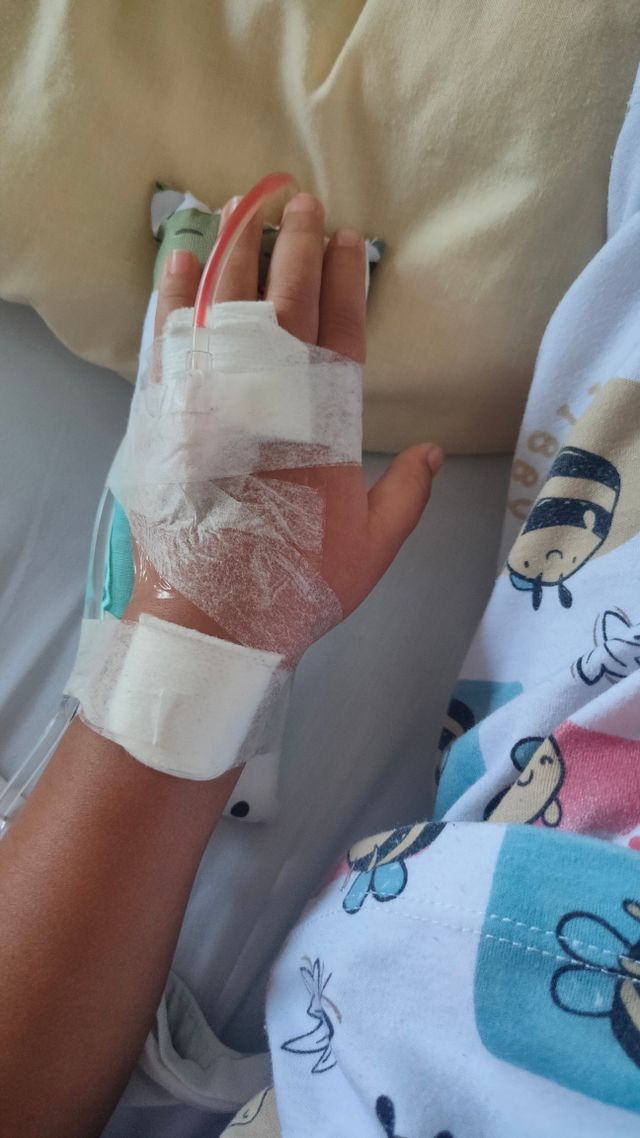
When I finally gathered enough composure to evaluate my physical form, I saw that my stomach was wrapped in thick, heavy surgical bandages. Beneath them lay eight heavy steel staples holding my abdomen together. Four separate tubes ran in and out of my flesh: one for an intravenous drip, one for a blood transfusion, one draining raw fluid directly out of my surgical stomach wound, and one connected to the urinary catheter.
The physical degradation was so absolute that I stopped thinking about my home or my children. My mind had no room for them. I only wanted an end. I wanted my soul to leave my body, fly clean out the hospital window, and abandon this broken, messy physical shell once and for all.
I spent those grueling days lying in a hospital bed, staring out a window that faced nothing but a blank concrete wall. Every second was a physical, mental, and emotional torment. Will this pain ever stop? Will I ever pee normally again? Will these hideous scars ever fade?
I fell into a dark spiral, believing the removal of my womb had permanently destroyed any chance of ever being loved or married again. I tortured myself wondering what would happen if I met a wonderful man who deeply desired a biological child of our own – a fear that ironically came true years later.
Ultimately, the only definitive boundary this harrowing experience drew was bringing a sharp end to my twelve-year corporate career with that company.
Lying in that hospital bed taught me the cold, unvarnished truth about the corporate world. You may like to think you are working with a company, but the reality is that you are an asset working for a company. A corporation might offer attractive medical benefits or cover expenses, but that does not mean the management possesses a shred of capacity to comprehend the deep mental and emotional duress you experience.
The endless hours I spent sacrificing my life —entertaining agencies, wining and dining clients, hanging out with managers, and building relationships to hit aggressive targets and generate massive revenue for the company— meant absolutely nothing the moment my health failed.
When you are healthy, you are an asset. When you are unwell, you are a liability.
Your physical body is the only vessel you are given to carry your soul across this earth, and you must protect it fiercely. If I had died in that hospital bed, my company would have posted a job listing and hired a replacement within a week. The only human beings on this entire planet who would have truly faced a devastating, irreplaceable loss were my children.
In my frantic, blind pursuit of what I thought was success, the two things I failed to pay attention to were my health and my kids. I should have worked hard to secure comfort, yes, but I should have stopped when we had enough. I could have easily used the hours I wasted entertaining corporate clients and drinking with managers to stay home or go to a spa. I should have let my body heal from the week’s frantic running, let my mind unwind from the endless loop of meetings and negotiations, and sat quietly on the couch letting my children tell me how their week went at school.
True caregiving stretches far beyond providing financial comfort and buying material things. It demands your physical presence, your time, and your undivided attention.
Taking care of yourself before you take care of others doesn’t just mean taking occasional holidays or regular breaks. It means having the radical courage to say an absolute “no” to unnecessary activities, corporate politics, and excessive workloads. You must balance your physical, mental, and emotional health needs with fierce intention.
Choosing and prioritizing your well-being is vital for any parent, but it is a matter of absolute survival for a single parent. If you want to be around for a long time to love, guide, and support your family, you must realize that while money is important, it will never, ever be more important than your health and the people waiting for you at home.
The Quiet Reflection
When I look back at the thirty-five-year-old woman lying in that hospital bed, staring at that blank concrete wall, my heart aches for her ignorance. I remember how intensely she grieved the loss of her womb, and how deeply she feared that cancer was the ultimate tragedy designed to break her life apart.
She thought she was learning the definitive lesson on survival. She thought she was writing the final chapter on resilience.
She had no idea that life was merely taking her through the preliminary training grounds.
She did not know that years later, a catastrophic financial collapse would strip away every single ounce of the wealth she had worked so hard to accumulate, forcing her to face the deep public shame of bankruptcy.
And most of all, she could never have comprehended the true, shattering definition of the word cancer. She thought cancer was the physical monster that cut open her stomach and stole her fertility. She did not yet know that the true nightmare of that disease would return years later, not to claim her own life, but to quietly, systematically steal the life of her precious daughter.
Standing here today as a grieving mother who had to watch her child fight the very same monster that targeted her decades earlier, my perspective on that original hospital room has shifted entirely.
When I survived my own cancer at thirty-five, I thought the lesson was simply to work less, go to the spa, and manage my stress. But now, after surviving bankruptcy, fighting my own disease, and enduring the absolute milestone of human grief by burying my child, I realize the lesson was vastly more profound.
Our bodies are not just corporate machines meant to be driven at maximum speed until the engine blows. They are sacred repositories of time. Every hour you sacrifice to a corporate environment that views you as a replaceable liability is an hour you actively steal from the people who will actually weep at your grave.
I used to think that taking care of myself was a luxury I couldn’t afford because I had to provide for my family alone. Now I understand that self-care is the ultimate act of parental responsibility.
Your loved ones do not need your flashy cars, your modern urban fixtures, or a massive bank account built on the wreckage of your health. They need you whole. They need you breathing. They need you present.
If you are currently living your life in the fast lane, treating your body like an unbreakable machine and ignoring the quiet warning signs flashing in your soul, I implore you to slow down. Do not wait for a doctor’s silent, apprehensive pause to shock you into clarity. Strip away the unnecessary noise, drop the corporate expectations, and choose to protect the vessel that carries you. Your career will replace you by next Monday, but the little eyes looking up at you from the living room couch never, ever will.
Looking for a Speaker?
A good talk should give people something to think about – and, ideally, something worth taking with them afterwards.

Think clearly. Live meaningfully. Grow with purpose.
Was this post helpful?
If you found this post helpful and you think it can help someone else, please share it.
It takes time to come up with meaningful content. If you appreciate the content and would like to help me rebuild my life after a profound loss, please consider making a contribution.

Leave a comment