
NORRATOR – NORRA + narrator
Stories shaped by experience
Palliative Care
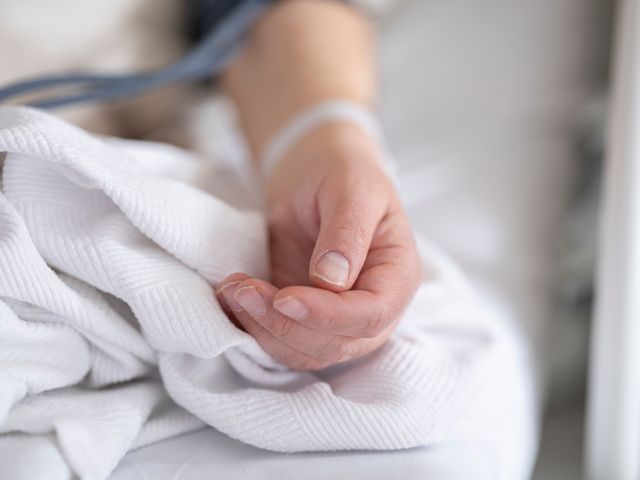
The second time we dealt with Tijani’s cancer was completely different from the first.
The first time she was diagnosed, she had an operation, the cancer came back, and she went through chemotherapy. There were many trips to the hospital. Tests, appointments, treatment, more tests, more appointments. It was exhausting, but there was always something being done to fight the cancer.
The second time was different.
The cancer that had been declared in remission just months earlier came back. This time, it was Stage 4 and had spread.
There was no operation. No chemotherapy.
Chemotherapy wasn’t feasible because her liver and kidney functions were no longer at a level where she could safely undergo treatment.
So the focus of her care changed.
And that was when we were introduced to palliative care.
I had heard the term before, but I honestly didn’t know what it meant. I thought palliative care was for old people. I had confused it with geriatric care.
Palliative care is about relieving suffering and improving quality of life. It addresses pain and other symptoms, but also the psychological, social and emotional needs of patients and their families.
And here’s something I didn’t know then: palliative care doesn’t necessarily mean someone is about to die. It can be provided alongside treatment, at different stages of a serious illness.
But in Tijani’s case, treatment was no longer an option. Palliative care became the main focus of her care.
I remember the difference between the hospital wards quite vividly.
The surgical ward felt like a chop shop.
Chop, chop. In and out.
The ward was hectic. People coming and going. Nurses moving quickly. Doctors doing rounds. Procedures. Tests. There was always something that needed to be done, and then the next patient needed attention.
I understood why. Hospitals are busy places, and surgical wards have a job to do.
But then we experienced the palliative care unit.
It was… peaceful.
The atmosphere was different. Quieter. Slower. The nurses seemed gentler. There was more time to talk, more time to listen, more attention to whether the patient was comfortable.
And I remember feeling almost guilty for appreciating it.
Because there was something unsettling about it too.
Even though everyone was talking about comfort and quality of life, somewhere in the back of my mind was the thought:
This is where people come when they’re going to die.
It sounds morbid when I write it now.
But that was honestly how I felt then.
I was beginning to understand that palliative care wasn’t about giving up. It was about caring differently. And when treatment could no longer change the course of Tijani’s illness, that care became even more important.
Being under the care of the palliative care unit in UMMC made dealing with the shocking news of Tijani not being able to be treated, and the uncertainty of her condition much easier to accept.
Dr. Sheriza, Dr. Teena, Dr. Salma and the rest of the palliative team made a big difference.
Eventually, we were given the option of bringing her home.
We wanted that too.
We missed home. Our beds. Our cats. Our comfort.
But there was one big worry.
What if something happened in the middle of the night? What if she developed new symptoms? What if her pain became unbearable? How would we manage it without the doctors and nurses at the hospital?
We were told about a community hospice that could help manage her pain at home.
So we said, “Let’s go home.”
We were referred to Hospis Malaysia.
And I cannot tell you how relieved I was when the doctor and nurse made their first home visit.
Have you ever tried taking an ill patient to the hospital?
First, you have to get them dressed. Then get them into a wheelchair. Get them into the car. Fold up the wheelchair and put it away. Reach the hospital, get the wheelchair out again, get the patient registered, wait to be seen, and sometimes wait even longer for a bed.
It’s a whole thing.
And here we were, having a doctor’s appointment in our own home.
No driving to the hospital. No registration queue. No waiting for a bed.
The doctor and nurse came to us.
It sounds like such a simple thing, but when you’re caring for someone who is seriously ill, it makes a world of difference.
That was just the beginning.
Tijani’s condition was such that new symptoms and pain would appear every few days. We could contact Hospis Malaysia’s 24-hour emergency line when something happened, and we had regular visits from the same people who already knew her condition.
Nurse Nisha and Dr Wai Fong became familiar faces in our home.
They didn’t just talk to Tijani about her condition and medication. They talked to her like she was a person, not just a patient.
They gained her trust.
She was comfortable with them and talked about the things she liked – her favourite TV shows, her favourite food.
That’s how the four of us discovered that we were all foodies.
We talked about food. A lot.
I loved that.
Because Tijani was seriously ill, but she was still Tijani. She still had her favourite shows, her favourite food, her own personality and her own things to talk about.
She wasn’t just a collection of symptoms that needed managing.
She was a young woman who wanted to feel like herself, even as her illness took more and more away from her.
And the people from Hospis Malaysia understood that.
As time went on, Tijani’s condition worsened. Eventually, she could no longer take her medication orally.
Hospis Malaysia loaned us a device called a syringe driver. It delivered medication continuously under her skin, helping to keep her pain under control. Despite the constant stress and daily challenges Tijani and I were facing, I marvelled at the technology because seeing Tijani break out into pain almost all the time was heartbreaking.
When she experienced sudden pain, they taught me how to administer subcutaneous injections.
There was a lot to learn, and I had to learn as we went along. But I wasn’t left to figure everything out on my own.
Learning about Tijani’s medication and administering them was a whole experience in itself, which I’ll share in another story.
At every visit, with every new symptoms, I would hear the Hospis Malaysia team calling back to their office to check medication doses and treatment plans with their colleagues. I assumed we’d then have to go to the pharmacy and buy whatever medication was needed.
And then, miraculously, they’d pull out exactly what was required.
That’s when I understood why their backpacks were so big. 😀
There was something reassuring about knowing that they came prepared, that they knew what they were doing, and that I didn’t have to figure everything out on my own.
They weren’t just treating Tijani. They were helping me learn how to care for her.
And I needed that confidence.
Because while I was trying to make sure my daughter was comfortable, I was also dealing with the reality of what was happening to her. There were new symptoms, changes in medication, difficult decisions and the constant uncertainty of not knowing what would happen next.
Hospis Malaysia provided us with more than medical support. They provided emotional and social support too. They helped us understand what to expect as Tijani approached the end of her life.
And they understood that I was a caregiver who needed support just as much as Tijani needed care.
Illness, just like grief, isn’t linear.
Some days, Tijani was okay. Some days, she wasn’t.
We had a good August and September. We talked about life. We watched her favourite TV shows. We ate whatever she wanted.
We even talked about passwords. We were preparing for her passing.
There were practical things to discuss, decisions to make and things to sort out. They weren’t easy conversations, but they were conversations we had.
And in between all of that, there was still life.
There were meals. There was television. There were ordinary moments that became precious precisely because we knew our time together was limited.
We weren’t spending all our time in hospital corridors or waiting rooms.
We were home. Together.
By mid-October, Tijani lost consciousness. On November 3, she passed away peacefully. It was 3 o’clock on a rainy Friday afternoon. I know because I looked at the clock.
And, by some divine plan, Nurse Nisha was right there with us.
Of all the people who had walked with us through those months, she was there when Tijani drew her last breath.
I will always be grateful for that.
The last few months of Tijani’s life were not easy. I wouldn’t pretend otherwise. But they were also meaningful and memorable.
Because of Hospis Malaysia, Tijani had comfort, dignity and love right until the end.
And we had support.
For the hours Tijani and I didn’t spend queuing in hospitals, we spent them together.
For the worries we didn’t have to bear alone, we had more room to simply be with each other.
For the things I didn’t know how to do, there were people who taught me.
For the moments when I was frightened, there were people I could call.
For the days when caring for my daughter felt overwhelming, there were people who cared for us too.
That is what Hospis Malaysia gave our family.
Hospital comfort at home, as Tijani called it.
Not just medical expertise, but the reassurance of having someone who knew Tijani, who understood what she was going through and who treated her with kindness.
Not just pain management, but emotional and social support for the people living through the illness alongside her.
Not just care for a patient, but care for a daughter, a mother, a brother and a family.
Months after Tijani passed away, Nurse Nisha was still calling me to check if I was doing okay.
I was surprised. I had assumed that once Tijani’s case was closed, the care would stop.
But it didn’t.
My heart still bleeds when I think about those months. But it is also touched by the kindness and sincerity of the people who cared for Tijani, and for us.
Before this experience, I thought hospice care was about dying.
Now, I understand that it is also about living – even when the final outcome is something we cannot change.
It is about being surrounded by warmth and understanding. About people who see the person, not just the illness. About helping someone live as comfortably as possible, and helping their family find the strength to care for them.
Sometimes, you can’t cure.
Sometimes, you can’t stop what is happening.
But you can relieve pain.
You can make someone comfortable.
You can give a family the confidence to bring their loved one home.
You can teach a caregiver what to do when they’re frightened.
You can make room for ordinary moments in extraordinary circumstances.
You can help a daughter spend her final months watching her favourite shows, eating her favourite food and talking about life with her mother.
And sometimes, you can simply be there when she takes her last breath.
That is not nothing.
That is care.
There was also the financial side of things, which I don’t think I appreciated enough when I first wrote about this experience.
I couldn’t work. My savings were depleting.
When you’re caring for your seriously ill child, you don’t have the luxury of putting that responsibility aside to earn a living. You’re there because you need to be there.
The last thing you want is to be worrying about how you’re going to afford the medication needed to keep your child comfortable.
In our case, the medication and services provided through Hospis Malaysia’s care came at no cost to us. I did not pay a single ringgit for the medication they provided.
Not one.
I cannot overstate what that meant to me.
It was one less financial burden to carry at a time when I was already carrying so much.
We often talk about the value of medical care in terms of the treatment provided. But there is another kind of relief that comes from knowing you can access the care your loved one needs without having to worry about how you’re going to pay for every single thing.
That, too, is part of caring for a family.
If you can, please support Hospis Malaysia
I’m sharing our experience because I know what Hospis Malaysia’s care meant to our family. I also know that their work depends on the support of people who believe that patients and their families deserve access to compassionate care.
Hospice and palliative care are about more than the final days of life. They help people live with comfort and dignity, while supporting the families and caregivers who walk alongside them.
If you are in a position to contribute, I hope you’ll consider making a donation to Hospis Malaysia. Your contribution can help them continue providing care and support to other families who need it.

If you or someone you love needs palliative care in Malaysia, reach out to Hospis Malaysia and see if they can help you.
Hospis Malaysia — Patient Services
Hospis Malaysia — FAQs
I cannot give Tijani more time. But I can share what helped make the time we had together more comfortable, more meaningful and more dignified.
And I hope that, in some small way, this helps another family receive the same care we did.
Thank you, Hospis Malaysia, for caring for Tijani – and for caring for us.
Looking for a Speaker?
A good talk should give people something to think about – and, ideally, something worth taking with them afterwards.

Think clearly. Live meaningfully. Grow with purpose.
Was this post helpful?
If you found this post helpful and you think it can help someone else, please share it.
It takes time to come up with meaningful content. If you appreciate the content and would like to help me rebuild my life after a profound loss, please consider making a contribution.

Leave a comment