
NORRATOR – NORRA + narrator
Stories shaped by experience
When There's Nothing Left To Fight
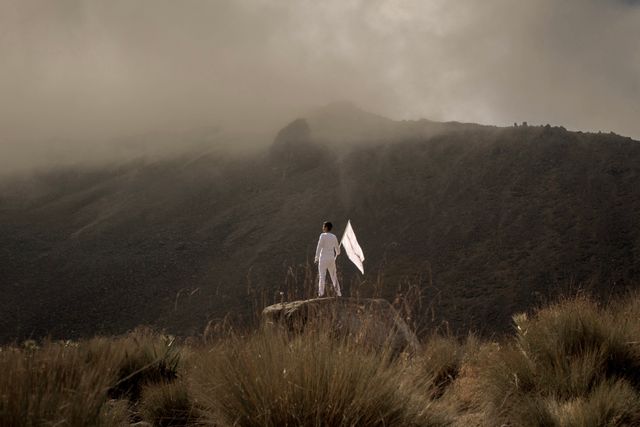
In work, goalposts that move without proper planning or informing the team are unfair. For the team member, it can be disheartening and demotivating. It is good practice to keep everyone informed of the company’s goals and help them get on track to achieving them.
In life, it is not so straightforward.
My journey in caring for my daughter from her first cancer diagnosis to her second was very distinct. The first time, I was fighting for her to live.
The second time, I thought I was fighting for the same thing.
Until the doctor said otherwise.
It is so much easier to be driven and gung-ho when the goalpost is clear and the results are obvious.
Play to score. Score to win.
Fight the cancer. Cancer dies. Daughter lives.
Simple.
The battle in the first year came in two stages — an operation that removed the tumours, followed by a year of chemotherapy because the cancer came back.
And then, it came back again.
Initially, I had the same fighter spirit.
We had fought before. We won.
We can do it again.
But life is such — it doesn’t always test you with the same challenge. Sometimes, it gives you something bigger because it needs to know you’re paying attention.
Just weeks after understanding that Tijani’s cancer had relapsed, we also understood that this time, the focus was on her comfort, not her recovery.
Imagine your soul on fire, ready to go, and then someone comes and throws a wet blanket over it.
Not just a dry blanket that douses the fire and leaves you in smoke.
A wet blanket.
It puts the fire out and leaves a heavy feeling on you.
If we were fighting to live, she would have needed to schedule appointments and treatment dates. Stick to a regimen because you want to win.
But because she was dying, we had to carry on.
Not the fight – the living, whatever was left.
When the second battle came, there were a lot of uncertainties. There were no treatment schedules. The doctor couldn’t tell us how long she had to live.
There wasn’t a scene like in TV shows where the doctor sits you down and says, “She has X months to live.”
Pain symptoms developed every few days, and we were in the emergency department more times than we would have liked.
There were more hospital trips and more mysteries to solve.
It was like a medical journey for Indiana Jones — we had to uncover what was next, solve the puzzle and get to the next one.
Except this journey didn’t end in precious stones and riches.
Despite it all, we decided to make the best of what we had.
On days when her health was not acting up, we would go out for long drives, just like we did in between the chemo sessions the year before.
We’d leave in the morning and come home by evening.
There is so much pleasure in simple things.
Get a cup of iced coffee. Drive to the beach. Look at the sea. Have dinner. Drive home.
That was living.
But the drives got shorter.
Her illness was eating away at her health, and she got tired easily. Eventually, we couldn’t go for drives anymore.
Her bladder was being pushed down by the cancer mass. She needed to relieve herself constantly, and she was nodding off every few hours.
Food has a way of comforting people, and it was one of the few things that still seemed to bring Tijani some joy.
Even when she could only manage a few bites, ordering food was something she looked forward to. We were blessed at that time because we had received donations, so I could afford to get her whatever she wanted.
I didn’t think much of it then. I just wanted her to eat.
But looking back, there was something about those meals that stays with me.
I was still accompanying my daughter through her everyday life — through meals, little outings, iced coffees, drives, whatever good moments we could still have. I was doing what a mother does: making sure she ate, making sure she was comfortable, making sure she had what she wanted.
And somewhere underneath all of that, I was dying inside.
I just didn’t have the space to think about it.
Because how do you process the fact that your child is dying when your job, as her mother, is still to care for her?
So I kept doing what needed to be done.
Food. Drinks. Water. Smoothies. Whatever made her a little happier. Whatever made life a bit easier.
There was no fighting. Just living.
And that was the strangest part of all.
After spending so much of my life fighting through whatever was thrown at me, I suddenly found myself in a place where there was nothing left to fight — only time left to live.
Whatever time we had. Whatever moments we could still have.
Living with uncertainty.
Looking for a Speaker?
A good talk should give people something to think about – and, ideally, something worth taking with them afterwards.

Think clearly. Live meaningfully. Grow with purpose.
Was this post helpful?
If you found this post helpful and you think it can help someone else, please share it.
It takes time to come up with meaningful content. If you appreciate the content and would like to help me rebuild my life after a profound loss, please consider making a contribution.

Leave a comment