What economics can teach us about the choices we make, the value we assign, and the lives we build.
Scarcity: You Can't Have Everything. And That's Okay.
5 mins read
In Economics, scarcity exists because resources are limited, while human wants are virtually unlimited.
We have limited money. Limited time. Limited resources. Limited capacity.
But there is no shortage of things we could want, pursue, experience, achieve or become.
And that creates a fundamental economic problem:
We have to choose.
We cannot spend the same dollar twice.
We cannot be in two places at the same time.
We cannot pursue every opportunity.
We cannot give our full attention to everything.
And we cannot say yes to everything without, somewhere along the way, saying no to something else.
That is scarcity.
But here’s where Economics becomes surprisingly relevant to life.
Our scarcest resources aren’t always financial.
Think about your time.
You may have 24 hours in a day, but those 24 hours are already being claimed by work, family, responsibilities, sleep, commuting, errands, relationships, health, learning and —if we’re lucky— some time for ourselves.
Then there is energy.
You might technically have three hours available, but if you are mentally exhausted, those three hours do not have the same value as they would on a day when you are rested and focused.
Then there is attention.
In a world where almost everything is competing for our attention, what we choose to focus on becomes a resource allocation decision.
And perhaps most interestingly, there is capacity.
We may have the ability to do something but not the capacity to do it now.
This is why “I can” and “I should” are not necessarily the same thing.
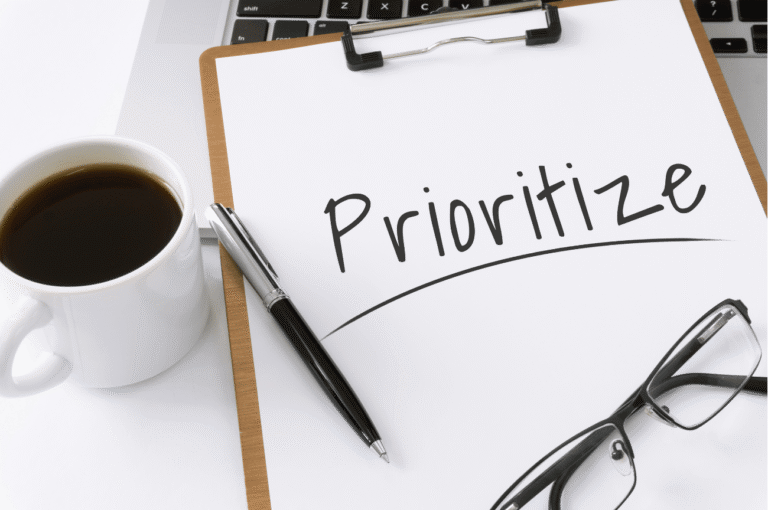
Scarcity forces us to prioritise.
And this is where I think the concept becomes much more interesting.
We often talk about priorities as though they are simply a matter of preference.
What do you want to prioritise?
Scarcity tells us something more uncomfortable:
You don’t get to prioritise everything.
If everything is important, nothing is truly prioritised.
Choosing to spend more time building a business may mean less time available for something else.
Choosing to pursue a promotion may mean accepting greater responsibility and less flexibility.
Choosing to protect your health may mean declining opportunities that once seemed attractive.
Choosing rest may mean doing less.
And sometimes choosing one person, responsibility or purpose means choosing not to give the same resources to another.
That doesn’t necessarily mean one choice is right and the other is wrong.
It means resources are finite.
And finite resources require decisions.
Which brings us to something Economics calls opportunity cost.
Every choice has an alternative.
When we choose A, we are not only choosing A.
We are also giving up B, C or D — the alternatives we could have pursued with the same resources.
This is why I have come to think that “no” is not always rejection. Sometimes it is allocation.
We are deciding where our limited resources will create the greatest value.
And that is a healthier way to think about priorities.
Instead of asking “How do I fit everything in?”
we should sometimes ask:
“What deserves the resources I have?”
That question changes everything.
Because scarcity isn’t necessarily about deprivation.
When we accept that we cannot have everything, we are forced to decide what matters most.
Having to choose is not a limititation.
It gives our choices meaning.
Because when you can have everything, nothing is important.
The economics of a life
We often imagine that a successful life is one where we manage to accumulate more:
More money. More experiences. More achievements. More opportunities. More possessions. More recognition.
But scarcity reminds us that the real measure may not be how much we accumulate.
It may be how intentionally we allocate what we have.
Because eventually, every one of us has to work with a finite supply of something.
Time.
Energy.
Attention.
Money.
Health.
Relationships.
And, ultimately, life itself.
We don’t get to choose how much of everything we have.
But we do have some say in where we put what we have.
Scarcity may have taught me “You can’t have everything.”
Also “Because you can’t have everything, choose deliberately.”
And this was the first principle of Economics that showed me economics exist in our everyday lives.
It takes time to come up with meaningful content. If you appreciate the content and would like to help me rebuild my life after a profound loss, please consider making a contribution.





Leave a comment