
NORRATOR – NORRA + narrator
Stories shaped by experience
The Emergency Ward
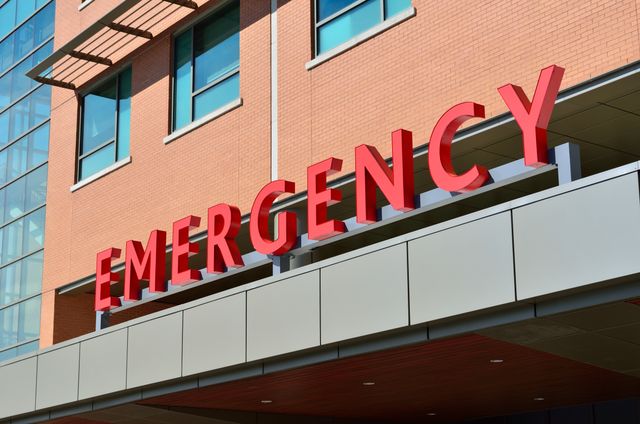
The first time we went to the ER, we were there for more than 44 hours and we were sent home without any treatment or medication.
I think it was because they hadn’t received the results of her scan and the biopsy.
We brought Tijani to the ER because she was having pains in her stomach. It seemed like after the ultrasound at the gynaecologist two weeks prior, her stomach started becoming distended. We had been to the hospital three more times since then – for a CT scan, a biopsy, and a check-up.
Tijani had gotten a CT Scan TAP (Thorax, Abdomen, Pelvis) done 9 days earlier, and a biopsy 5 days earlier.
Spending more than 44 hours in one go and another half a day in the emergency ward showed me a lot of different realities.
Everything I am recounting is based on my observation, personal experience and deduction in retrospect.
Pathways have to be kept clear so movement isn’t restricted for the medical staff. They need to be able to act quickly for the patient’s benefit.
There are no chairs for family members, you have to remain standing – if you are even allowed to be in there.
Most of the time, family members are not allowed in there, but there was an exception in our case. At that time, nobody knew that Tijani’s cancer had relapsed – at least we didn’t. Her condition was very dynamic and it seemed like nobody was sure on the next plan of treatment.
I had to stand next to her bed and advocate for her needs as she was unable to speak due to her pain. Initially, she was given a generic painkiller. However, it didn’t work and she was given another medication. This medication worked only for a short time and the pain came back.
Eventually, she was given a fentanyl shot and her pain was under control.
All of this happened over a span of many hours. Nothing moves as fast as you think it does on TV.
In reality, that’s just how medication works. The doctor has to ask the patient what happened, check the symptoms, then the doctor gives medication to see if it works. If it doesn’t, they’ll give another one that is stronger, and see if that works.
On that day, our bed was situated right ahead of the triage station.
During times when I wasn’t holding Tijani’s hand, trying to comfort her, or chasing after doctors, I could see what was happening.
There is a person who is looking at the patient files, some kind of sorting is done, and patient names being assigned to beds.
I’m not from a medical background, but when you’ve stood where I was long enough, you start to figure out the patterns. I believe what I described is the triage process itself.
There were beds that were in the assigned bays, and then there were beds that were rolled into the space in between beds during times when there were more patients. Most patients would be there for a few hours before they get sent to the wards.
It was a very busy day in the ER, but I’m guessing it’s like that most days. The ER is a bustling place with a lot of movement and emotions.
By the time the doctor said we would be discharged, we had been there for a long time. We arrived on Wednesday night, and we were discharged in the early hours of Friday morning.
I was so tired from standing for so long, and I was focused on getting Tijani help for her pain. It didn’t occur to me to ask about the CT scan and biopsy results, though I wondered why they didn’t give us anything for the pain.
So when they told us we were being discharged, we were more relieved than surprised.
I think we had a slight denial and hoped that her stomach would settle on its own and we’d never have to go back to the hospital again.
Yeah right.
Four days later, we were back at the ER again. Tijani’s stomach had gotten bigger and she was in more pain than the last time.
We didn’t know if the hospital would have more information about Tijani’s condition or if we’d be waiting for a long time just like the last time.
Again, during moments where I didn’t attend to Tijani, I would observe what was happening in the ER.
Patients come in for so many reasons. Some patients come in with obvious physical wounds, but there are far more who come in with symptoms that are not visible. I saw all sorts of people and health conditions.
The lady next to us kept asking for a particular doctor by name as though the doctor was an item from a menu.
There was a girl who was happy to be there alone and would stiffen up when her parents were around.
There was also an elderly aunty who was lying down calmly on her bed.
I couldn’t help but wonder what the other patients were in there for, whether their situation was worse our better than ours.
In the background, between the beeping sounds of the monitors, I could hear a loud snoring sound. There was an uncle who had fallen asleep.
There is always a continuous flow of medical assistants or medical officers taking blood or urine or stool samples from the patients. Some are gentler than others, while some are quite rough.
Over time, I saw patients getting sent to wards. I knew because I saw hospital attendants coming to the emergency ward and wheeling the patient away, on the way towards treatment and getting better.
Then, a different patient would be assigned to the bed, and the process repeats.
It almost feels like winning something, similar to a scene from the movie The Island (with Scarlett Johansson) when the patient gets selected to go. I was oddly envious because they got to leave the madness of the ER while Tijani and I were still stuck there, with no diagnosis and treatment yet.
Amidst the stress of being stuck in the emergency ward, the doctors were figuring out what was happening with Tijani. Her case was considerably complicated. All the while, I had been standing next to her bed.
At some point, a doctor approached me and asked to speak privately.
She told me that Tijani’s cancer had come back.
It had spread.
It was in stage 4.
The movement in the rest of the ward was still hectic. Only my mind slowed down. I was like a Macbook with a beachball icon. I think I understood what the doctor said but my mind was not processing it.
But truthfully, I wasn’t too distraught at this point.
My thinking was “The same cancer? We beat you before, we can do it again.”
My biggest task was trying to figure out how to let Tijani know.
I was in shock, I was sad. I did not know when or how to break this news to her.
When my daughter went to the bathroom, the lady in the bed next to my daughter struck up a conversation.
It’s rather unusual to see younger people in the emergency ward, so she asked what my daughter was there for. I described the history of our struggles with cancer and shared the dreadful news I had just been told.
She was sympathetic.
Then she asked me something I found very strange: Was I going to tell my daughter?
I remember thinking: What do you mean, am I going to tell her?
What was I supposed to say when we had to go for more appointments and treatments?
What was Tijani supposed to think when she knew something was happening in her body? After all, she was the one who felt something wasn’t right with her body and asked for an appointment with the gynaecologist.
The woman told me: “Please don’t tell her. Let her live a happy life.”
She thought that it was best to not let Tijani know.
This is not something I would’ve thought of, but I considered it for a split second.
I thought about how I would feel about not knowing what’s going on with my body, but had to live with it no matter how it turned out.
I reprimanded myself for even considering hiding the truth from my daughter. Nah, this option was not viable. If anything, my kids and I were practical and realistic people. They never grew up thinking ‘their father went out to buy milk and never came home’. They always knew the truth.
The truth is hard, but that’s life.
It wasn’t about if I would be telling her the truth, it was about how I was going to break the news to her.
There I was, having an internal battle of trying to accept what the doctor had informed me.
I was trying to figure out how to tell my daughter that the cancer had returned.
And this lady genuinely suggests for me not to.
I don’t know what la-la land the lady was in, but I decided the truth was the way to go.
After all that thinking and contemplating, it turned out I didn’t have to.
Tijani already knew.
She had been watching the doctors too.
She understood their behaviour.
So that’s that.
Finally, just like the other patients in the ER, a hospital attendant came to wheel Tijani’s bed to a ward.
I remember feeling some relief.
She was finally leaving the ER. We were finally moving somewhere. Surely, this meant they had figured something out.
I was still thinking that they would drain the fluid from her abdomen, get her pain under control, and then we would figure out how to fight the cancer again.
We had beaten it before. We could do it again.
Except this time, the ward we were being wheeled to was the palliative care unit.
At the time, I didn’t fully understand what that meant.
I just knew that we were finally leaving the emergency ward.
The ER is a strange place. People arrive in pain, confusion or fear. Some leave with answers. Some leave with treatment. Some get wheeled away to a ward, and you imagine they are one step closer to getting better.
I had been watching that happen for more than 30 hours, across two visits.
And when it was finally our turn to leave, I thought we were moving towards the same thing.
I didn’t know yet that we were moving towards something completely different.
Was this post helpful?
If you found this post helpful and you think it can help someone else, please share it.
It takes time to come up with meaningful content. If you appreciate the content and would like to help me rebuild my life after a profound loss, please consider making a contribution.

Think clearly. Live meaningfully. Grow with purpose.
Looking for a Speaker?
A good talk should give people something to think about – and, ideally, something worth taking with them afterwards.

Leave a comment